Loading
Field notesApril 8, 2026 · 5 min read
Why your bathroom tile is cracking — and how to stop it
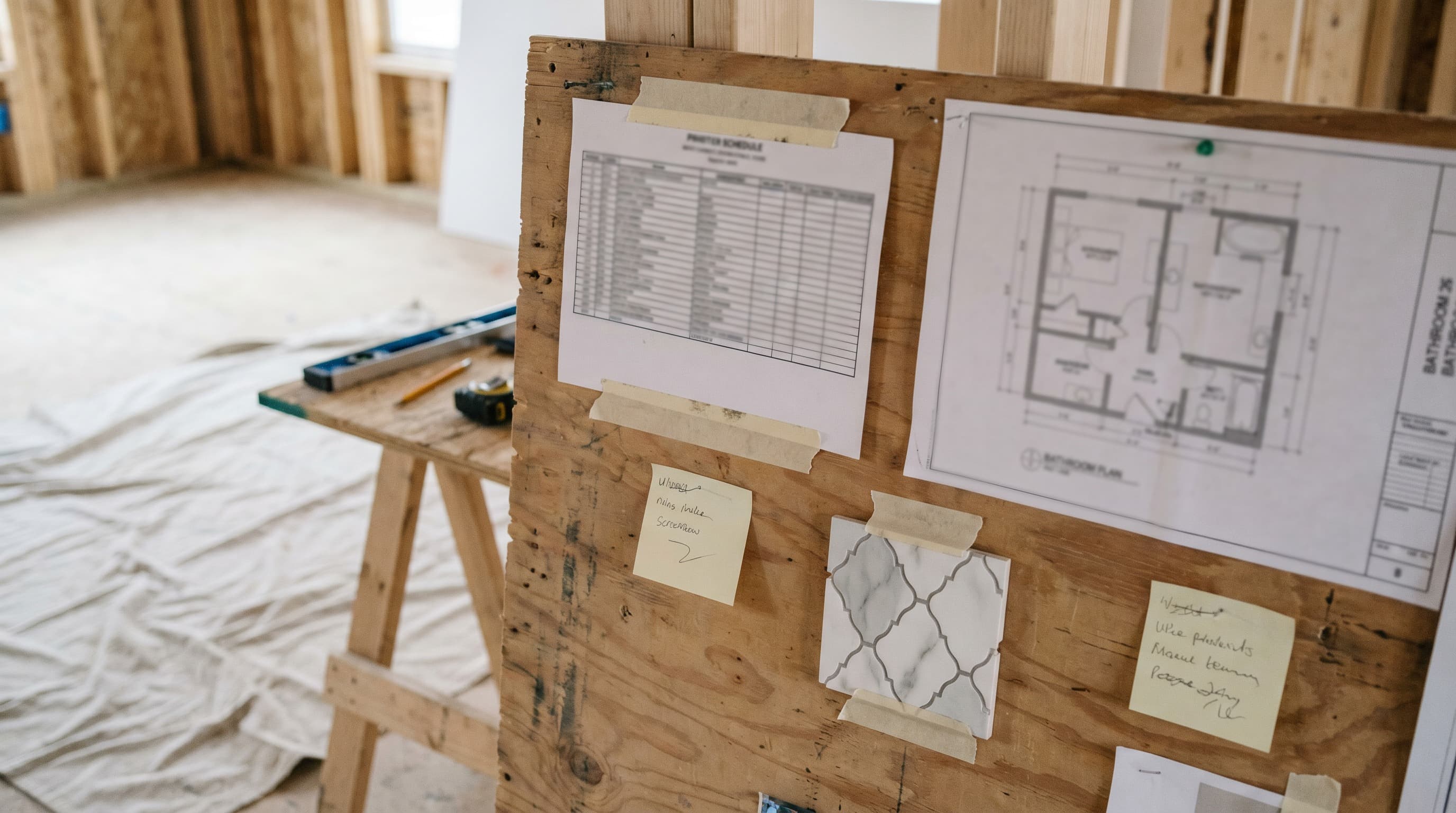
Nine times out of ten, it's not the tile. It's the substrate, the membrane, or the joist deflection underneath. A short field guide.
Got called out to a Manassas townhouse last Tuesday — a five-year-old bathroom remodel had hairline cracks running across the shower floor and along the wall-to-floor joint. The homeowner thought the tile was defective. It wasn't. The substrate was.
Here's the short version of what actually causes bathroom tile to crack, in order of how often we see it.
Joist deflection
Most NoVA townhouses built in the late '90s and early 2000s used 2x10 joists at 16" centers. That meets code for residential floor loading, but it doesn't always meet the much tighter L/360 deflection standard tile actually needs. When the floor flexes more than 1/360 of its span under load, rigid tile cracks at the grout lines first, then through the body.
The fix is upstream of the tile work: sister the joists, or install a structural underlayment like 1/2" cement board over plywood with the right fastener schedule.
Skipped waterproofing membrane
Cheaper installers skip the Schluter Kerdi or RedGard membrane on shower walls and floors to save a few hundred dollars. The result, eight to twenty-four months later: mold-driven substrate failure, then visible cracking. By the time you can see the crack, the cement board behind it is already sponge.
Real fix: full demo, properly applied membrane, retiling. There's no shortcut.
Wrong thinset for the application
Large-format tile (anything 15" or larger on a side) needs a medium-bed or large-and-heavy-tile thinset. Standard modified thinset under a 24" tile leaves voids; the tile sounds hollow when you tap it, and it cracks the first time something gets dropped.
How we estimate a bathroom tile job
On every bathroom we quote, we add a line item called Substrate Verification: $0–800 depending on what we find. If your floor's solid, that line is zero. If it's not, you see exactly what we'd need to do before we lay a single tile. No surprise change orders.
Written by Nick Jaber
Snap a quote